Home appliances have become an important part of modern living. From refrigerators and washing machines to microwaves, vacuum cleaners, air conditioners, and kitchen appliances, the right products can make everyday tasks faster and easier.
However, buying a home appliance is not always simple. There are many brands, features, sizes, energy ratings, technologies, and price points to consider. A product that works perfectly for one household may not be the right choice for another.
The best approach is to focus on your actual needs instead of buying an appliance simply because it has the newest features.
This guide explains the most important home appliance categories and provides practical tips to help you make smarter buying decisions.
Why Choosing the Right Appliance Matters
A home appliance is usually a long-term purchase.
Unlike small everyday items, appliances can remain in your home for years. Their performance can affect your electricity or water usage, convenience, maintenance costs, and daily routine.
Before buying, consider:
- How often you will use it
- Available space
- Energy consumption
- Capacity
- Essential features
- Maintenance requirements
- Warranty and service
- Total ownership cost
Thinking about these factors before shopping can help you avoid expensive mistakes.
Refrigerators
A refrigerator is one of the most important appliances in most homes.
When choosing one, start with capacity. A larger refrigerator is not automatically better if your household does not need the extra space.
Consider your household size, shopping habits, kitchen layout, and available space.
Important features may include adjustable shelves, temperature controls, storage compartments, frost-free operation, and energy-efficient performance.
Also measure the space carefully before purchasing. Remember to account for door clearance and ventilation requirements.
Washing Machines

Washing machines can save considerable time and effort.
Common options include front-loading and top-loading models, each with different designs and operating characteristics.
When comparing washing machines, consider capacity, wash programs, water usage, spin performance, noise levels, and installation requirements.
If you wash large amounts of clothing regularly, a larger capacity may be useful. Smaller households may prefer a compact model.
Do not choose based only on the number of washing programs. Focus on the cycles you are actually likely to use.
Air Conditioners
An air conditioner can significantly affect comfort and energy consumption.
Choosing the right capacity is important. An undersized unit may struggle to cool a room, while an oversized unit may not operate as efficiently as expected.
Consider room size, climate, insulation, sunlight exposure, and how frequently the room is used.
Features such as adjustable temperature settings, timers, sleep modes, air filters, and smart controls may also be useful.
Energy efficiency should be considered carefully because cooling appliances can contribute significantly to household electricity consumption.
Microwaves
Microwave ovens are useful for reheating food, cooking simple meals, and quickly handling everyday kitchen tasks.
When choosing one, consider the available counter or cabinet space, internal capacity, power level, controls, and cooking functions.
Some models provide additional cooking modes, while basic models focus on simple reheating.
If you already have a full-size oven, you may not need an appliance with extensive cooking features.
Ovens and Cooktops
Ovens and cooktops are important for households that prepare meals regularly.
Before purchasing, consider the available kitchen space, cooking habits, fuel or power requirements, and cleaning needs.
Features such as multiple cooking modes, temperature controls, timers, easy-clean surfaces, and safety functions can make everyday use more convenient.
Think about your typical meals rather than buying features you may rarely use.
Dishwashers

Dishwashers can save time and reduce the effort required to clean dishes.
When choosing one, consider capacity, rack configuration, wash programs, water usage, noise levels, and installation requirements.
If you have a smaller kitchen, size may be the most important consideration.
Look for models that fit your daily dishwashing needs without requiring unnecessary capacity.
Vacuum Cleaners
Vacuum cleaners come in many styles, including traditional upright models, cordless designs, handheld units, and robotic systems.
The best choice depends on your home.
For example, homes with multiple floor types may benefit from versatile cleaning features. Homes with pets may require stronger cleaning performance and specialized attachments.
Consider battery life for cordless models, dustbin capacity, filtration, weight, accessories, and maintenance requirements.
Robot Vacuum Cleaners
Robot vacuum cleaners have become increasingly popular because they can automate routine floor cleaning.
Many models can navigate rooms, avoid obstacles, schedule cleaning sessions, and return to a charging station.
More advanced models may offer mapping, app controls, automated dust collection, or other smart features.
However, robot vacuums are not necessarily a complete replacement for traditional cleaning.
Consider your flooring, furniture arrangement, room layout, and cleaning expectations before purchasing.
Water Purifiers and Filters

Water filtration products can be useful depending on local water quality and household requirements.
Different filtration technologies address different concerns, so it is important to understand what a particular system is designed to reduce or remove.
Avoid choosing a purifier based only on marketing claims.
Check product specifications, maintenance requirements, filter replacement schedules, and relevant certifications where applicable.
If you are unsure about your water quality, consider getting reliable information about your local water supply before selecting a system.
Air Purifiers
Air purifiers are designed to filter certain airborne particles and may be useful in appropriate indoor environments.
When comparing models, look at room coverage, filtration technology, noise levels, filter replacement costs, and energy consumption.
Do not choose a unit solely because it has a high marketing rating.
Make sure the product is suitable for the room size and your intended use.
Regular filter maintenance is also important for maintaining performance.
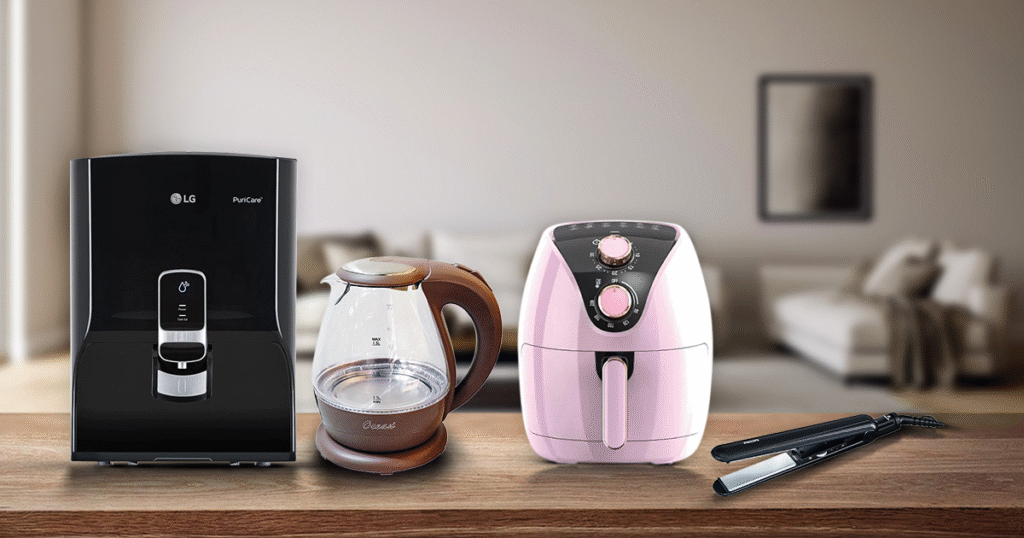
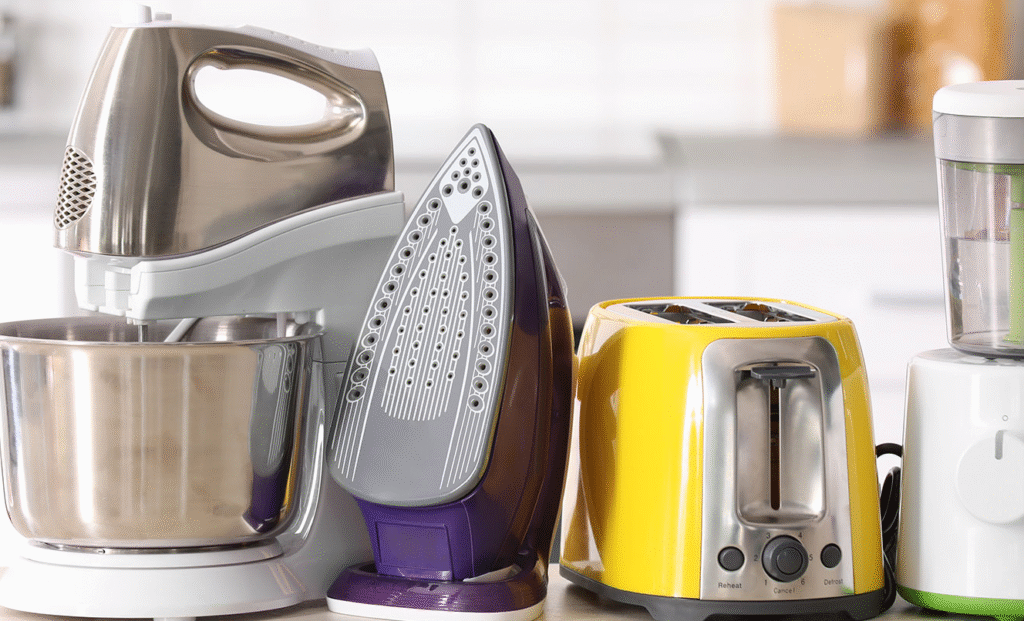
Kitchen Appliances
Smaller kitchen appliances can make food preparation more convenient.
Popular categories include:
- Blenders
- Food processors
- Electric kettles
- Toasters
- Coffee makers
- Hand mixers
- Rice cookers
- Air fryers
Think about your cooking routine before purchasing.
If you rarely make smoothies, for example, an expensive high-powered blender may not be necessary.
Choose products that solve a real problem in your kitchen.
Smart Home Appliances

Smart appliances can connect to mobile apps or home networks.
Depending on the product, smart features may allow you to monitor settings, schedule operations, receive notifications, or control an appliance remotely.
These features can be convenient, but they may also increase complexity.
Before buying a smart appliance, ask whether the connected features provide meaningful value.
Also consider app compatibility, software updates, privacy, and how the appliance behaves if the internet connection is unavailable.
Energy Efficiency
Energy efficiency is one of the most important factors to consider when purchasing large appliances.
A lower purchase price does not always mean lower overall cost.
An appliance that uses less electricity or water may save money over its lifetime, depending on usage and local utility rates.
Look for reliable energy information and compare expected consumption between models.
When comparing products, consider both the purchase price and ongoing operating costs.
Measure Before You Buy

One of the most common appliance-buying mistakes is failing to measure the available space.
Measure the width, height, and depth of the installation area.
Also consider:
- Door opening space
- Hallway width
- Stairways
- Cabinet clearance
- Ventilation
- Electrical connections
- Water connections
A product may technically fit into a space but still be difficult to install or use comfortably.
Check Capacity Carefully
Capacity should match your household needs.
Buying too small can mean frequent cycles or limited storage.
Buying too large can increase the initial cost and may use more resources than necessary.
Think about how frequently you cook, wash clothes, store food, or clean your home.
Choose a capacity that fits your normal routine rather than an occasional situation.
Compare Features That Matter
Appliance manufacturers often advertise many features.
Some can be genuinely useful, while others may be unnecessary for your household.
Make two lists before shopping:
Must-have features:
Functions you genuinely need.
Nice-to-have features:
Functions that would be convenient but are not essential.
This makes comparisons easier and can prevent you from paying more for features you will rarely use.
Consider Maintenance
Every appliance requires some form of maintenance.
Filters may need cleaning or replacement. Washing machines may require cleaning cycles. Refrigerators need appropriate ventilation and cleaning. Vacuum cleaners may need dustbins emptied and filters maintained.
Before purchasing, check:
- Filter replacement costs
- Cleaning requirements
- Availability of spare parts
- Service options
- Maintenance frequency
An inexpensive appliance may become less attractive if replacement parts or maintenance are difficult to obtain.
Check Warranty and Service
Warranty coverage can provide valuable protection after purchase.
Read the warranty terms carefully rather than assuming everything is covered.
Check what is included, how long coverage lasts, and whether specific components have different warranty periods.
Local service availability is also important.
A technically excellent appliance may become inconvenient if repairs require long waits or specialized service that is difficult to access.
Think About Total Cost
The purchase price is only one part of the cost.
Consider the total cost of ownership, which can include:
- Purchase price
- Installation
- Electricity
- Water usage
- Replacement filters
- Repairs
- Accessories
- Maintenance
A slightly more expensive appliance may provide better value if it is efficient, reliable, and inexpensive to maintain.
Read Reviews Carefully
Customer reviews can provide useful real-world information, but they should not be your only source of information.
Look for repeated patterns across many reviews.
Pay attention to comments about:
- Reliability
- Noise
- Performance
- Installation
- Ease of use
- Customer service
- Maintenance
Be cautious about extremely positive or negative reviews that provide little detail.
Professional reviews and manufacturer specifications can also help you understand the product more completely.
Avoid Buying Based Only on Price
A low price can be attractive, but the cheapest product is not always the best value.
An appliance that performs poorly or requires frequent repairs may cost more over time.
At the same time, the most expensive model is not automatically the best choice.
Look for the balance between quality, features, efficiency, reliability, and price.
Consider Your Lifestyle
The best appliance is the one that fits your daily life.
A busy household may value automation and larger capacity.
Someone living in a small apartment may prioritize compact dimensions.
A family that cooks frequently may need a different kitchen setup than someone who prepares simple meals.
Your lifestyle should be one of the main factors guiding your decision.
Make Your Home Appliances Last Longer
Proper use and maintenance can help appliances remain useful for longer.
Follow the manufacturer’s instructions and avoid overloading appliances beyond their recommended capacity.
Clean filters and components as instructed.
Keep appliances properly ventilated where required.
Address unusual noises, leaks, error messages, or performance changes instead of ignoring them.
Small maintenance tasks can sometimes prevent larger problems.
When Should You Replace an Appliance?

There is no single replacement schedule that applies to every appliance.
Consider replacing a product when repair costs become unreasonable, performance declines significantly, parts are difficult to find, or energy consumption is much higher than newer alternatives.
If an appliance still works reliably and meets your needs, replacement may not be necessary simply because a newer model exists.
FAQ’s
1. How do I choose the right home appliance?
Consider your space, household needs, budget, energy use, features, and maintenance costs.
2. Are energy-efficient appliances worth buying?
Yes, they may help reduce electricity or water usage and lower operating costs over time.
3. Should I buy smart home appliances?
Smart appliances can be useful if their connected features provide real value for your daily routine.
4. Why should I check appliance reviews?
Reviews can provide useful insights into performance, reliability, noise, installation, and maintenance.
5. How can I make appliances last longer?
Follow manufacturer instructions, clean components regularly, avoid overloading, and complete recommended maintenance.