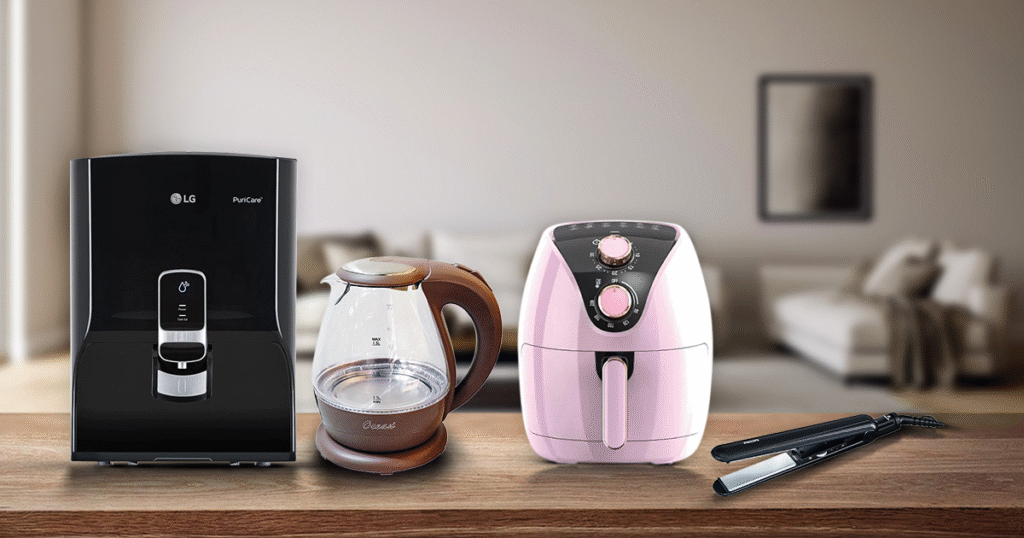
Buying a home appliance can feel deceptively simple—until you actually sit down to compare your options. Suddenly, you are staring at dozens of models, conflicting user reviews, complicated energy labels, and lists of features that sound impressive but might not actually matter to your day-to-day life. A refrigerator is rarely just a box that keeps food cold anymore, and modern washing machines often come with more settings than an airplane dashboard.
The good news? Picking the right appliance does not have to feel overwhelming. You do not need to hunt down the most expensive model on the market, nor do you need a machine with endless bells and whistles. What truly matters is finding something reliable that fits your living space, your daily routine, and your actual budget.
This practical guide breaks down what you should evaluate before pulling out your wallet, along with realistic strategies to help you get genuine long-term value from your purchase.
Start With Your Everyday Reality
Before diving into brand names or reading technical spec sheets, take a step back and look at how your household actually operates.
A single person or a couple living in a small apartment rarely needs a massive multi-door refrigerator. On the flip side, a family of five that does laundry every single day will quickly regret buying a compact, low-capacity washing machine just because it was on sale.
Before you start shopping, ask yourself a few grounding questions:
- How often will this appliance actually be used?
- How many people in the house will rely on it daily?
- How much physical space can I realistically spare for it?
- Which features will I use every week, and which ones are just cool gimmicks?
- What is my maximum comfortable budget, including setup costs?
- Will this unit noticeably increase my monthly utility bills?
Answering these simple questions right away helps filter out eighty percent of the products on the market, keeping you focused only on what actually fits your life.
Measure Your Space (And Then Measure It Again)

One of the most common—and frustrating—buying mistakes is choosing an appliance without double-checking physical dimensions.
Grab a measuring tape before you even open a browser window. Do not just measure width and height; check the depth as well. Refrigerators, dishwashers, and front-loading washers often stick out further than people expect, blocking cabinet doors or tight walkways.
Crucial layout details to check:
- Door Clearance: Ensure there is plenty of room for appliance doors, lid openings, and pull-out drawers to extend fully without hitting counters, walls, or islands.
- Ventilation Space: Most major appliances need a few inches of breathing room around the sides, top, and back to exhaust heat efficiently.
- The Delivery Route: Measure every single doorway, hallway, stairwell, and elevator door the appliance has to pass through to reach its final spot.
Taking five minutes with a tape measure now can spare you the head-splitting headache of a delivery truck driving away with an appliance that could not fit through your front door.
Think About Running Costs, Not Just the Price Tag
An appliance’s sticker price is only the first half of what it actually costs you. Electricity, water, and routine maintenance add up continuously over the lifetime of the machine.
When comparing models, take a close look at the energy rating and estimated annual utility consumption. Paying an extra $50 to $100 upfront for an energy-efficient unit can easily save you hundreds of dollars in lower electric bills over a five-to-ten-year span.
This is especially true for items that run non-stop or pull heavy power, such as:
- Refrigerators and freezers
- Air conditioners and space heaters
- Washing machines and clothes dryers
- Water heaters
Instead of asking yourself, “Which one is cheapest right now?” try asking, “Which one will cost me less to own over the next five years?” That subtle shift in mindset almost always leads to a smarter purchase.
Decipher Features Before Paying Extra
Appliance manufacturers love to highlight flashy features to justify higher price tags. While some of these innovations are genuinely helpful, many end up completely ignored after the first week of use.
Feature Priority Guide by Appliance
| Appliance Type | Features Worth Paying For | Features You Can Usually Skip |
| Washing Machines | Inverter motors, quick-wash cycles, load sensing, clear temperature controls | Excessive custom cycle presets, built-in Wi-Fi diagnostics |
| Refrigerators | Adjustable shelving, dual-cooling zones, clear door layouts, high energy efficiency | Built-in outer door screens, specialized craft ice makers |
| Ovens & Microwaves | Easy-clean interior linings, intuitive controls, consistent heating modes | Complex pre-programmed recipe banks, app control |
| Dishwashers | Stainless steel tubs, adjustable racks, low decibel (dB) noise ratings | Ultra-specific specialized cycles you’ll rarely run |
Make a short list of your absolute “must-haves” before you browse. Keep them strictly separate from features that are merely “nice to have,” and refuse to pay extra for gimmicks you won’t use.
Look Beyond Showroom Styling
Sleek matte finishes, dark stainless steel, and touchscreens look incredible under bright store lighting. But good looks won’t wash your clothes or keep your food fresh when a machine breaks down.
Always prioritize build quality, noise output, reliability, and maintenance accessibility over raw aesthetics. If an appliance sits hidden in a laundry room or closet, cosmetic design shouldn’t factor into your decision at all. If it sits in an open kitchen, strike a balance—choose something visually appealing, but never compromise on performance or durability just to match a color scheme.
Read Reviews Like a Professional

Online reviews are a goldmine of real-world information, but only if you know how to filter through them properly.
Avoid focusing entirely on a product’s overall star rating. A four-star machine might have earned low scores simply because a shipping box arrived dented, while a five-star machine might be rated by people who have only owned it for two days.
What to look for in long-term feedback:
- Recurring Patterns: If ten different buyers complain that a specific drain pump fails after eighteen months, take that warning seriously.
- Noise and Vibration: Real homes highlight noise issues far better than a quiet showroom ever can.
- Customer Support Experience: Look for notes on how responsive the manufacturer was when something actually went wrong.
- Build & Part Quality: Search for comments regarding flimsy handles, snapping plastic latches, or hard-to-find replacement filters.
Ignore one-off extreme complaints, ignore brand-new unboxing praise, and focus on consistent trends across users who have owned the appliance for six months or longer.
Factor in the True Total Cost
The price listed on the tag or online checkout page is rarely your final total expenditure. Before making a final decision, map out the auxiliary expenses that come with installing and running the unit.
Potential hidden costs to calculate:
- Delivery and unboxing fees
- Professional installation charges (especially for gas ranges, dishwashers, or built-in units)
- Removal and disposal fees for your old appliance
- Required accessory kits (such as new water supply lines, vent hoses, or heavy-duty cords)
- Ongoing consumable costs (like specialized water filters, descaling solutions, or air filters)
A budget model can quickly become surprisingly expensive if it requires pricey custom fittings or hard-to-find replacement parts down the line.
Inspect Warranty Terms and Service Networks

A warranty is only as good as the service network behind it. Before committing to a purchase, check both the length of the coverage and the actual terms.
- Component-Specific Coverage: Many manufacturers offer a standard one-year full warranty alongside a five-to-ten-year warranty on specific core parts (like a compressor in a fridge or a direct-drive motor in a washer).
- Local Service Availability: Ensure the brand has certified repair technicians and authorized service centers in your immediate area. A long warranty means very little if the manufacturer has no local technicians to send out when your machine breaks down.
- Keep Your Records: The moment your appliance arrives, snap a clear photo of the receipt, serial number, and warranty card. Store these digitally so you aren’t hunting through drawers when you need service years later.
Are Smart Appliances Actually Worth It?
Wi-Fi connectivity, mobile app notifications, and voice-assistant integration are standard across many modern appliances today. They allow you to monitor cycle times, preheat ovens remotely, or receive alerts if a door is left cracked open.
While these functions can be convenient for tech-enthusiastic households, they also introduce potential failure points. Software updates can get buggy, smart apps can lose support over time, and electronic control boards can be expensive to replace out of warranty.
If a smart feature solves a specific daily annoyance for you, it might be worth the extra cost. If not, a simpler, well-built mechanical unit will often serve you just as reliably—if not more so—over the long haul.
Match Capacity to Your Actual Usage
Buying the largest capacity available “just in case” is a common trap. Larger appliances take up more room, use more energy, and generally cost significantly more up front.
- Refrigerators: A standard guideline is roughly 4 to 6 cubic feet of space per adult in the household, plus a little extra for entertaining.
- Washing Machines: If you only do small or medium loads a few times a week, a giant 10-kg+ drum will end up wasting water and energy on half-empty cycles.
- Dishwashers: Standard 24-inch tubs suit most average families, while compact 18-inch models are ideal for smaller apartments or couples.
Be realistic about your daily habits today, while keeping any planned household changes over the next few years in mind.
Don’t Fall for the “Big Discount” Illusion
A massive red discount tag or a “50% Off” banner can make any product look like a steal. However, a steep markdown doesn’t automatically mean a product is a good fit for your home.
Retailers often apply deep discounts to clear out discontinued stock, models with known reliability issues, or items that were originally overpriced.
Before getting excited about a sale price:
- Check the item’s historical pricing to see if the discount is real or just marked down from an inflated list price.
- Verify that the specs, dimensions, and energy consumption actually fit your criteria.
- Ensure the model still comes with full manufacturer warranty coverage.
The best purchase is never just the item with the biggest discount; it is the machine that reliably balances price, performance, and everyday practical usability.
Create a Final Decision Matrix
When you have narrowed your choices down to two or three final contenders, map them out side by side. Seeing the details laid out clearly makes your final choice much simpler and removes the emotion from the process.
| Comparison Factor | What to Evaluate |
| Total Upfront Cost | Retail price + delivery + installation + necessary cords/hoses |
| Dimensions & Fit | Height, width, depth, door-swing clearance, and entry route space |
| Capacity & Size | Whether it comfortably handles your household’s regular workload |
| Energy Efficiency | Star ratings, estimated annual kilowatt-hour (kWh) or water use |
| Essential Features | Key functions you will use weekly vs. gimmicks you will ignore |
| Warranty & Service | Length of coverage and local technician availability |
| User Feedback | Consistent long-term reliability trends in real customer reviews |
| Ease of Maintenance | Simple filter cleaning, accessible parts, and basic upkeep |
Focus on Long-Term Value
At the end of the day, a great home appliance should do its job quietly and reliably in the background, making your daily life easier without causing unexpected financial strain.
Instead of getting caught up in store displays or high-tech hype, focus on the fundamentals: proper sizing, solid build quality, low running costs, and dependable after-sales support. Spending a little extra for energy efficiency and proven reliability is almost always a smart move—just as skipping expensive, unnecessary add-ons will keep your budget right where it belongs.
FAQ’s
1. What should I consider before buying a home appliance?
Check the appliance’s size, capacity, energy efficiency, features, price, warranty, and maintenance needs.
2. Is a higher-priced appliance always better?
No. The best appliance is one that offers the features and performance you actually need within your budget.
3. Why is energy efficiency important?
Energy-efficient appliances can help reduce electricity consumption and lower running costs over time.
4. Should I read customer reviews before buying?
Yes. Reviews can provide useful information about performance, durability, noise, maintenance, and service quality.
5. How can I choose the right appliance size?
Measure your available space and choose a capacity that matches your household’s everyday needs.