Modern home appliances sit at the very center of daily life. Between washing clothes, storing fresh groceries, cooking dinner, and regulating the temperature in your living room, these machines save a massive amount of physical effort and time every week. But that convenience comes with a trade-off. Major household gear can quietly absorb a massive portion of your monthly energy budget, particularly if you are relying on aging equipment that draws electricity around the clock.
That reality is precisely why energy-efficient appliances make so much practical sense today. They are built to do the exact same heavy lifting while treating electricity far more carefully. Over time, making a habit of choosing efficient gear curbs total energy consumption and keeps household utility bills at a manageable level.
Upgrading your home is not as simple as picking out whatever machine carries the brightest eco-sticker on the sales floor. You have to look closely at capacity, actual usage habits, maintenance requirements, and how much power a unit pulls under real-world conditions.
Understanding Energy Efficiency
Energy efficiency is crucial because small bits of power consumption accumulate rapidly over months and years.
Think about the gear running in your home right now. A refrigerator stays powered up continuously, day and night. Meanwhile, a washing machine, air conditioner, water heater, or dishwasher runs multiple times throughout the week. When these machines consume more power than necessary to complete their basic tasks, that waste shows up directly on your monthly power bill.
Efficient units perform the exact same work while pulling significantly less power than standard alternatives. Beyond direct monetary savings, lowering your household’s total power consumption reduces demand on the local grid, making your home far lighter on shared resources.
There is zero need to panic and replace every single working appliance in your home today. The most practical approach is waiting until an old machine reaches the natural end of its life, then selecting a high-efficiency replacement as a sensible, long-term investment.
Interpreting Energy Labels
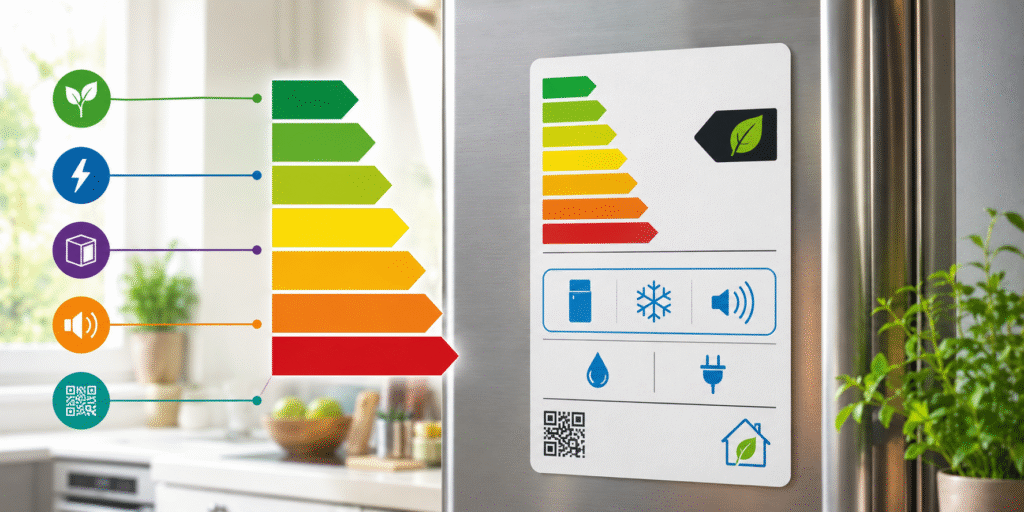
When you start shopping, the first piece of information you will encounter is the yellow energy-rating label fixed to the appliance.
These stickers offer a quick snapshot of how efficiently a machine operates. Depending on your region and the specific product line, the exact rating scale and layout can vary slightly.
Do not rely strictly on a basic star count or letter grade. Take time to look at the fine print detailing the estimated annual kilowatt-hour (kWh) usage, and use that specific figure to compare similar models side by side.
If you are comparing two refrigerators, evaluate their internal volume alongside their expected energy usage. A massive refrigerator naturally requires more power to cool than a compact alternative, even if both models carry top-tier efficiency tags. The smart play is picking a size that handles your real storage needs without forcing you to pay for cooling empty space.
Key Appliances and Efficient Choices
Different household machines offer unique opportunities to save energy. Focusing your attention on the heaviest power users will yield the best financial return.
Refrigerators Because a refrigerator runs non-stop, even minor improvements in operating efficiency compound into substantial long-term savings.
- Select a capacity that matches your actual household, rather than buying the largest model on the showroom floor.
- Look for units featuring thick insulation, precise temperature controls, and inverter technology, which allows the compressor to adjust its cooling output instead of constantly running at maximum power.
- Get into the habit of closing doors quickly, letting warm leftovers cool down before placing them inside, checking that door seals remain tight, and keeping the unit away from direct sunlight or heat sources.
Washing Machines Washing machines draw both electricity and water, meaning true efficiency accounts for both utility costs.
- Search for units equipped with load-sensing features or dedicated eco-cycles that adjust water volume to match the weight of your laundry.
- Wash routine loads in cold or lukewarm water whenever possible. Heating cold water accounts for most of the electricity consumed during a standard wash cycle.
- Hold off on starting a cycle until you have gathered a full load of laundry, rather than running multiple small batches throughout the week.
Air Conditioners Cooling equipment represents one of the largest power draws in any modern home, especially during hot summers.
- Sizing is critical here. An oversized air conditioner cycles on and off far too quickly without removing humidity properly, while an undersized unit runs flat-out all day without cooling the space adequately.
- Choose inverter models, which adjust compressor speeds dynamically to match the room’s precise cooling demands.
- Set your thermostat to a reasonable temperature, keep doors and windows shut while cooling is active, and wash intake filters regularly to prevent air blockage.
Water Heaters Heating domestic water takes a massive amount of electrical energy, making water heaters a major culprit behind high utility charges.
- Pick a tank size that aligns with your family size so you are not paying to keep dozens of gallons of hot water sitting unused for hours.
- Look for tanks constructed with dense insulation, or explore tankless, on-demand systems if your plumbing setup supports them.
- Keep the max temperature set to a reasonable level, and install external timers to shut the unit off during hours when everyone is sleeping or out of the house.
Kitchen Appliances Kitchen setups provide plenty of minor opportunities to shave down daily power usage through smart habit changes and simple equipment choices.
- Induction cooktops: Direct magnetic energy straight into compatible cookware, wasting far less ambient heat compared to traditional electric coils or gas flame burners.
- Ovens: Bake several dishes at once whenever you preheat the oven to make full use of that stored thermal energy.
- Microwaves and counter units: Rely on smaller counter appliances like air fryers or microwaves for minor meals instead of heating up a full-sized main oven.
Sizing and Smart Features
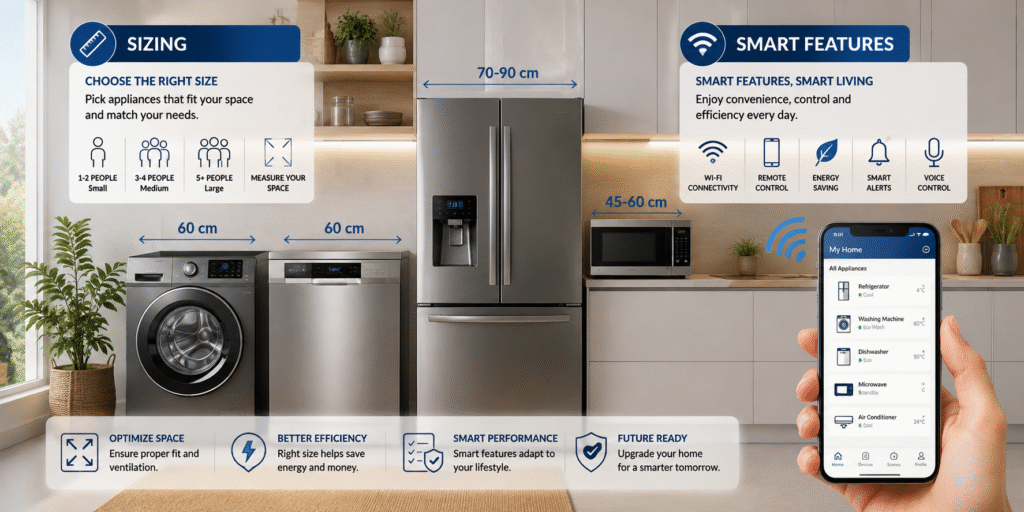
One of the easiest ways to keep energy use down is simply purchasing the right equipment size from the start. Larger appliances require higher baseline power to operate, so paying for capacity you will rarely fill makes little sense. A massive refrigerator or giant washer might make sense for a family of six, but it wastes money in a small household.
Smart technology can help you track and manage power usage, but it is not essential. Many modern appliances connect directly to home Wi-Fi networks, allowing you to review usage stats, schedule cycles for off-peak hours, or receive phone alerts if a door stays open. While these features are handy, a connected unit is not automatically more energy-efficient than a simple, well-insulated manual option. Always verify the core electricity consumption numbers before spending extra money on smart features.
Calculating Total Cost and Maintenance
The sticker price at the store is only a fraction of what an appliance actually costs you over its functional life.
True cost of ownership includes:
- Initial purchase price
- Projected electricity and water costs over a 5 to 10-year period
- Routine maintenance expenses and replacement parts
- Expected lifespan and warranty terms
Spending slightly more upfront for a high-efficiency model typically pays for itself through lower utility bills over the years you own it.
Once you bring a new appliance home, basic routine care keeps it operating at peak efficiency. Clogged air conditioner filters, dusty refrigerator coils, and scaled-up water heater elements force internal motors to work much harder, pulling extra power to compensate. Simple chores like rinsing filters, checking door gaskets, and wiping down ventilation grates keep your gear running smooth.
Adopting Power-Saving Habits
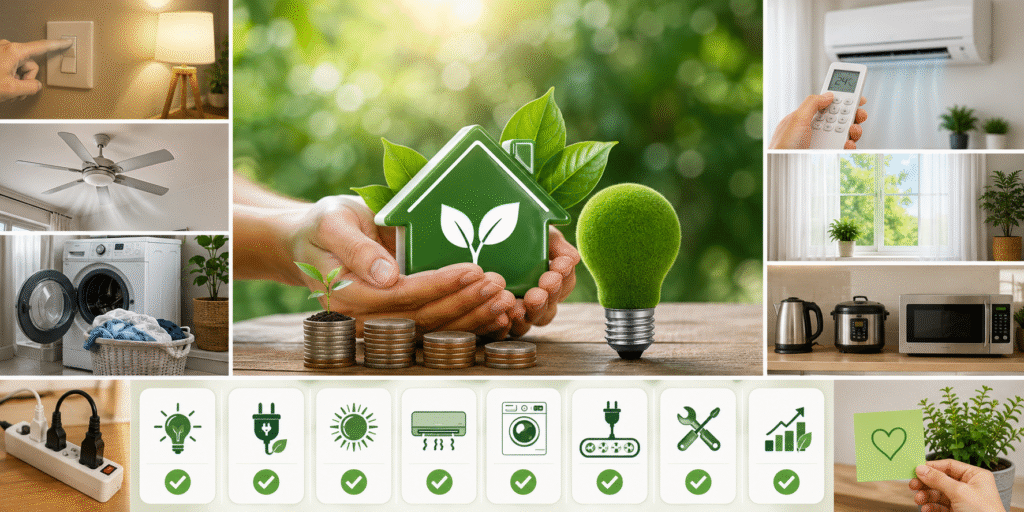
You do not always have to buy new products to lower your monthly power consumption. Small adjustments in your daily routine deliver immediate results:
- Turn off gear and pull plug adapters when items sit idle to eliminate phantom standby power draw.
- Plug electronics into power strips with master switches so you can kill power to multiple devices in one motion.
- Close blinds or curtains during hot afternoons to block sunlight and reduce the cooling load on your air conditioner.
- Wait until dishwashers and washing machines are completely full before starting a cycle.
Knowing When to Replace
While efficiency is important, tossing out a perfectly functional, relatively modern machine is rarely the right move. Manufacturing and shipping new appliances consumes significant resources and energy. If your current unit runs reliably and uses a reasonable amount of power, stick with it until repairs become impractical. Save your budget for when the machine actually reaches the end of its line.
FAQ’s
1. What are energy-efficient home appliances?
They are appliances designed to perform everyday tasks while using less energy.
2. Which home appliances use the most energy?
Air conditioners, refrigerators, water heaters, washing machines, and cooking appliances can use significant energy.
3. Can energy-efficient appliances reduce electricity bills?
Yes, using efficient appliances can help reduce electricity consumption and potentially lower energy costs.
4. Are smart appliances always energy-efficient?
Not necessarily. Check the appliance’s energy rating and actual consumption rather than relying only on smart features.
5. How can I make my appliances more efficient?
Use energy-saving settings, maintain appliances regularly, avoid unnecessary use, and choose the right size for your needs.