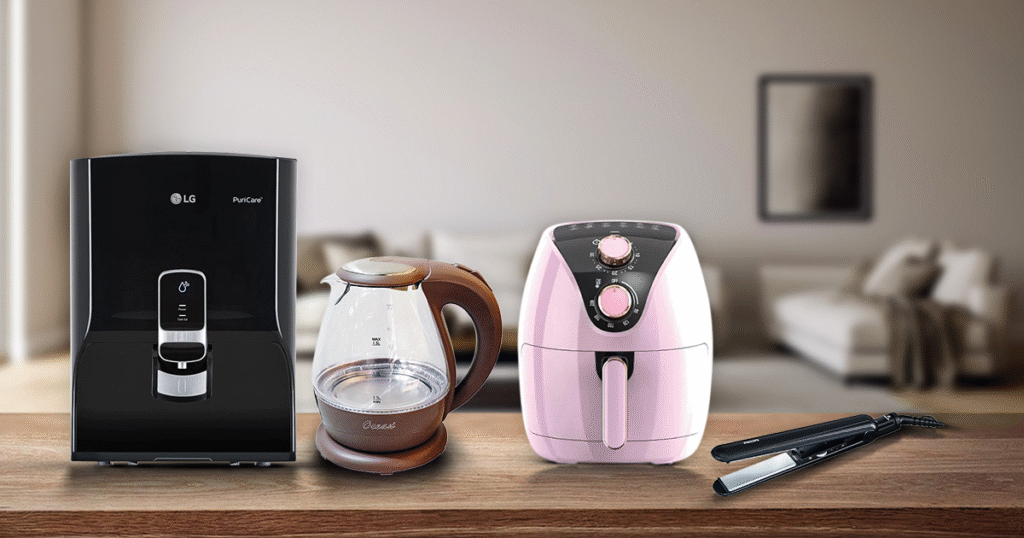
Home appliances have become a regular part of modern life. From refrigerators and washing machines to air conditioners, microwave ovens, vacuum cleaners, and water purifiers, these products can save time and make everyday household tasks much easier.
However, buying an appliance is not always as simple as choosing the most expensive model or the one with the longest list of features. Every home has different needs. A large family may need a high-capacity washing machine, while someone living alone might prefer a smaller and more affordable option.
The smartest approach is to think about how you will actually use an appliance before spending money on it. Price, size, energy consumption, features, maintenance, warranty, and service support all deserve attention.
This guide will help you understand what to look for so you can make a practical decision without feeling overwhelmed.
Start With Your Household Needs
Before browsing different models, think about your daily routine.
Ask yourself how often you will use the appliance, who will use it, and what you expect it to do. A product that looks impressive in a showroom may not be useful if most of its features remain unused.
For example, a small household may not need a very large refrigerator. Similarly, someone who rarely cooks may not need a premium oven with numerous cooking modes.
Start with your actual requirements rather than advertisements or trends.
Consider:
- Number of people in your household
- Frequency of use
- Available space
- Preferred features
- Budget
- Electricity and water consumption
- Cleaning and maintenance
- Warranty and service availability
Once you understand your priorities, comparing products becomes much easier.
Measure Your Available Space

One of the most common mistakes when buying a large appliance is forgetting to measure the space properly.
Before ordering, measure the height, width, and depth of the area where the appliance will be placed. Also leave enough room for ventilation, doors, drawers, cables, and regular maintenance.
Think about the delivery route as well.
A refrigerator may fit perfectly in your kitchen but still be difficult to move through a narrow doorway or staircase. If you live in an apartment, check whether the appliance can comfortably pass through the entrance and elevator.
A few minutes spent measuring beforehand can prevent a major problem later.
Set a Realistic Budget
Your budget should include more than the initial purchase price.
An appliance can also involve delivery, installation, accessories, electricity, water, maintenance, and future repairs.
For example, two washing machines may have similar prices, but one could consume less water and electricity over several years. In that situation, the slightly more expensive option might provide better overall value.
Before buying, consider:
Purchase price + installation + operating cost + maintenance = real cost of ownership
You do not necessarily need the cheapest product. Look for the option that provides the best balance between quality, useful features, and long-term expenses.
Pay Attention to Energy Efficiency
Energy efficiency is an important factor, especially for appliances that run frequently or for long periods.
Refrigerators, air conditioners, washing machines, water heaters, and other major appliances can contribute significantly to household energy use.
Check the official energy rating or efficiency information available for the product in your market. A more efficient appliance may cost more initially but could help reduce running expenses over time.
Also consider how often you will use the appliance. A highly efficient product may be particularly valuable when it operates every day.
Choosing the Right Refrigerator
A refrigerator is usually one of the most important appliances in a kitchen.
When selecting one, consider its capacity, layout, energy consumption, freezer space, shelf design, and cooling performance.
Think about your shopping habits.
If you buy fresh food frequently, you may want more refrigerator space. If you store frozen food regularly, a larger freezer section could be more useful.
Also check whether shelves can be adjusted and whether the door compartments can hold the items you commonly use.
Do not choose a refrigerator simply because it has the largest capacity. A larger model takes up more space and may not be necessary for a smaller household.
Choosing a Washing Machine


Washing machines come in different capacities and designs, so your household size and laundry habits should guide your choice.
A small household may be comfortable with a compact machine, while a larger family may benefit from greater capacity.
Important factors include:
- Washing capacity
- Water consumption
- Energy efficiency
- Spin speed
- Wash programs
- Noise level
- Drum size
- Installation requirements
Think about the types of clothes you regularly wash. If you mainly wash everyday clothing, you may not need a machine with dozens of specialized programs.
Simple controls and useful settings can often be more valuable than a long feature list.
Selecting an Air Conditioner
For homes in hot climates, an air conditioner can make a significant difference in comfort.
The first thing to consider is the size of the room. An air conditioner that is too small may struggle to cool the space, while one that is unnecessarily powerful may cost more than needed.
Look at:
- Cooling capacity
- Energy efficiency
- Noise level
- Filter design
- Temperature controls
- Installation requirements
- Maintenance needs
- Local service availability
Regular filter cleaning and proper maintenance are also important for maintaining performance.
Choosing a Microwave Oven
A microwave can be useful for reheating food, defrosting ingredients, and preparing quick meals.
Before buying one, decide how you plan to use it.
If you mainly want to reheat food, a basic model may be enough. If you want to cook or grill different types of meals, you might prefer a model with additional functions.
Useful features can include:
- Multiple power levels
- Defrost settings
- Timer
- Preset programs
- Grill function
- Combination cooking
Avoid paying extra for functions that you are unlikely to use.
Selecting a Vacuum Cleaner

The best vacuum cleaner depends on the type of home you have.
A lightweight cordless model can be convenient for quick cleaning, while a larger vacuum may be better for deep cleaning.
Think about your flooring, furniture, storage space, and cleaning habits.
If you have pets, pay attention to hair removal and filtration features. If your home has stairs, a lighter model may be easier to handle.
Convenience matters just as much as suction power when you use a vacuum regularly.
Smart Appliances: Are They Worth It?
Smart appliances can connect to your phone or home network and may offer features such as remote controls, notifications, scheduling, and monitoring.
These features can be useful, but they are not essential for everyone.
Before paying extra for smart functionality, ask whether it solves a real problem in your routine.
For example, receiving a notification when a washing cycle is complete could be useful for someone with a busy schedule. But if you do not need remote access, a simpler appliance may provide better value.
Technology should make your life easier rather than making the appliance unnecessarily complicated.
Do not rely only on the average star rating. A product with a slightly lower rating may actually suit your needs better than a highly rated product with features you do not need.
Compare Warranty and Service Support

Warranty coverage is an important part of any major appliance purchase.
Check how long the warranty lasts and what it covers. Also find out whether authorized service centers are available in your area.
Consider the availability and cost of replacement parts as well.
An appliance may have excellent specifications, but poor service support can become frustrating if something goes wrong.
For expensive appliances, dependable after-sales service can be just as important as the product itself.
Consider Maintenance Requirements
Every appliance needs some level of maintenance.
A refrigerator may need regular cleaning and seal checks. An air conditioner may need filter cleaning and periodic servicing. A washing machine may need drum and detergent-area cleaning.
Before buying, find out what regular maintenance is required.
An appliance that is easy to clean and maintain can save time and reduce frustration.
Following the manufacturer’s maintenance instructions can also help keep the appliance working properly for longer.
Think About Noise
Noise is another detail that is easy to overlook when shopping.
An appliance may seem quiet in a large showroom but feel much louder in a small home.
This is particularly important for refrigerators, washing machines, dishwashers, air conditioners, and vacuum cleaners.
If an appliance will be placed near a bedroom, living area, or home office, check the available noise information before purchasing.
A quieter appliance can make everyday life more comfortable.
Don’t Pay for Features You Don’t Need
Modern appliances often come with many advanced features.
Some are genuinely useful, while others may simply make a product look more impressive.
Think about your everyday routine.
If you rarely use special cooking modes, there may be little reason to pay extra for them. If you never use smartphone controls, a connected appliance may not offer much value.
Focus on features that solve real problems.
A simple appliance that performs its main function reliably can be a better purchase than an expensive model filled with functions you never use.
Compare Several Options
Avoid buying the first appliance you find.
Choose at least two or three options and compare them based on the factors that matter most to you.
A simple comparison can include:
| Feature | Option A | Option B | Option C |
|---|---|---|---|
| Price | Compare | Compare | Compare |
| Capacity | Check | Check | Check |
| Energy efficiency | Check | Check | Check |
| Key features | Check | Check | Check |
| Warranty | Check | Check | Check |
| Service support | Check | Check | Check |
| Reviews | Check | Check | Check |
| Maintenance | Check | Check | Check |
This makes it easier to identify which appliance actually fits your needs.
FAQ’s
1. How do I choose the right home appliance?
Consider your space, household needs, budget, energy use, features, and long-term maintenance costs.
2. Are energy-efficient appliances worth buying?
Yes. They can help reduce electricity or water consumption and may save money over time.
3. Should I choose an appliance with more features?
Not always. Choose features that you will actually use instead of paying extra for unnecessary functions.
4. Why should I check the warranty?
A good warranty can provide protection against certain manufacturing defects and unexpected repair costs.
5. Is the cheapest appliance the best choice?
Not necessarily. Compare quality, energy use, warranty, service, and long-term costs before deciding.