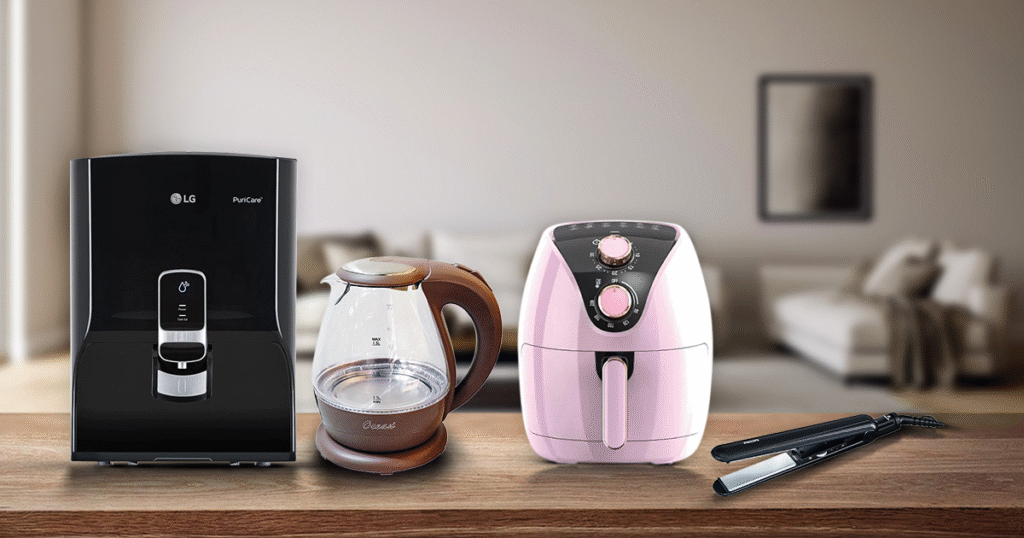
Upgrading to energy-efficient appliances is one of the easiest ways to lower your monthly electricity bill without sacrificing home comfort. From refrigerators and air conditioners to washing machines, water heaters, and ceiling fans, making smart choices about your home appliances can make a massive difference to your utility expenses over time.
In India, the Bureau of Energy Efficiency (BEE) uses its Standards & Labelling system to help consumers compare appliance efficiency and estimate potential power savings.
However, getting the best value isn’t simply a matter of buying the most expensive option on the market. The smartest approach is balancing a product’s energy efficiency rating against your household’s actual usage habits, maintenance costs, and the unit’s expected lifespan.
What Are Energy-Efficient Home Appliances?
An energy-efficient appliance does the exact same job as a standard model, but uses significantly less electricity or water to get it done.
For instance, an efficient refrigerator maintains ideal cooling using a fraction of the power required by an older model, while an efficient washing machine cleans clothes thoroughly using less water and electricity. Many modern models also include smart scheduling features that automatically prevent unnecessary power draw.
Efficiency matters because the purchase price on the receipt is only part of what an appliance actually costs. Every time you run an appliance, you are paying for its ongoing operation through your monthly utility bills.
Why Energy Efficiency Matters
Electricity bills compound quickly when multiple power-hungry appliances run simultaneously every day. Air conditioners, refrigerators, and water heaters have a far bigger impact on your monthly expenses than low-power electronics.
Focusing first on high-use appliances gives you the best return on investment. Choosing energy-efficient models provides several clear advantages:
- Reduced monthly electricity consumption
- Consistently lower power bills
- Better long-term cost of ownership
- Lower strain on household utility systems
- Smaller environmental footprint
- Access to practical automation and scheduling features
Understanding the BEE Star Rating
For Indian shoppers, the BEE star label is the most reliable starting point when comparing new appliances.
The BEE Standards & Labelling programme gives consumers clear data on how an appliance performs under standard test conditions. The system makes it easy to compare similar models before making a purchase.
However, don’t focus strictly on counting stars. Read the exact power consumption numbers printed on the label (shown in kWh or units per year) and compare them across models with similar capacities. Higher-star appliances often carry a higher price tag, so check whether the estimated electricity savings will actually offset that extra upfront cost over the product’s lifespan.
Choosing the Right Refrigerator

Because a refrigerator runs continuously 24 hours a day, its energy efficiency directly impacts your monthly bill.
When shopping for a fridge, compare its annual power consumption, capacity, and feature set. Avoid buying a massive unit that exceeds your family’s actual storage needs, as cooling empty space wastes power.
Daily usage habits matter just as much as the appliance itself. Keep the fridge door closed as much as possible, and avoid standing with the door open while deciding what to grab. Ensure the unit has proper airflow around the back and sides so the compressor doesn’t have to work harder than necessary to stay cool.
Making Your Air Conditioner More Efficient
Air conditioning is usually the single largest contributor to summer power bills.
When buying an AC, look closely at its cooling capacity, efficiency rating, and how many hours a day you plan to run it, rather than getting distracted by decorative panels or minor features.
Once installed, small habits keep running costs manageable:
- Keep doors and windows fully sealed while running the unit.
- Clean or replace air filters every few weeks.
- Set the thermostat to a comfortable temperature like 24°C instead of dropping it unnecessarily low.
- Use smart timers or app schedules to turn off the unit when no one is in the room.
Using Washing Machines Efficiently
Washing machines can draw significant power and water, particularly when used multiple times a week.
To optimize efficiency, run full loads whenever practical instead of running frequent half-empty cycles. Stick to cold water or standard eco-wash programmes unless you are dealing with heavily soiled fabrics, as heating water accounts for most of the energy consumed during a wash cycle.
Paying Attention to Water Heaters

Water heaters draw heavy current, especially during colder months when households use hot water frequently.
Select an appropriately sized geyser that matches your family’s routine rather than buying an oversized tank that constantly heats unused water. Adjust the thermostat setting to a reasonable temperature, and turn the unit off as soon as everyone has finished bathing. If your model features built-in timers, schedule it to run only during your usual morning routine.
Energy-Efficient Fans and Lighting
Ceiling fans and lights run for hours every single day, meaning small performance gains in these categories stack up quickly.
Switching out older fluorescent or incandescent bulbs for modern LEDs dramatically cuts lighting power consumption. Similarly, upgrading old ceiling fans to models featuring BLDC (Brushless Direct Current) motor technology can cut fan electricity usage by more than half while delivering identical airflow.
Smart Appliances Can Help Reduce Waste
Connected smart appliances allow you to monitor and control energy use directly from your smartphone.
These features offer genuine value when they solve real-world problems. For example, remote control lets you switch off an AC you forgot to turn off before leaving the house, while built-in energy trackers reveal exactly how much power a cycle consumed. However, if you don’t plan on using connected smartphone features, there is no need to pay extra for them.
Don’t Ignore Maintenance
Even the most efficient appliance on the market will draw extra power if it isn’t properly maintained.
Routine upkeep ensures your equipment operates at peak efficiency:
- Clean air conditioner filters regularly to prevent restricted airflow.
- Clear lint build-up from clothes dryers to keep drying cycles short.
- Check door seals on refrigerators to prevent cold air leaks.
- Keep cooling coils free of heavy dust and debris.
Comparing Total Cost vs. Purchase Price

Focusing solely on the checkout price is a common mistake when shopping for home appliances.
Always calculate the total cost of ownership using this simple formula: Purchase Price + Long-Term Operating Costs
A cheap, inefficient appliance might save you money on day one, but it will quietly drain your bank account through higher utility bills over the next five to ten years. A slightly pricier, energy-efficient model often pays for the price difference within its first few years of use.
Before making a decision, evaluate:
- Initial purchase price
- Estimated annual power consumption
- Local electricity rates
- Maintenance needs and warranty coverage
- Expected product lifespan
Reducing Standby Power
Many electronics continue to draw small amounts of electricity—known as “phantom” or standby power—even when turned off via a remote or front panel.
A simple fix is switching off appliances directly at the wall socket when they aren’t in active use. Using smart power strips for entertainment setups or desk equipment makes it easy to cut power to multiple devices with a single switch.
Buying According to Your Actual Needs
Extra capacity and high-end features don’t automatically make an appliance better for your home.
Before buying, evaluate how often you will realistically use the item and which settings are actually necessary. Buying an oversized washing machine or refrigerator means paying extra for capacity you never fill, leading to higher baseline energy use. The ideal purchase is always one scaled correctly for your household’s actual needs.
Simple Daily Habits to Lower Energy Use

You don’t always have to buy new equipment to cut down your electricity bill. Adjusting everyday habits goes a long way:
- Turn off lights, fans, and electronics immediately when leaving a room.
- Avoid leaving refrigerator doors open for extended periods.
- Clean air conditioner and appliance filters at least once a month.
- Run washing machines only with full loads.
- Avoid setting ACs or geysers to extreme temperature settings.
- Use built-in eco modes and timers whenever available.
- Ensure appliances have enough ventilation space around them.
- Track your monthly power bills to spot unusual spikes in consumption.
Using BEE star ratings to guide your purchases alongside these basic habits ensures you keep household power bills under control without sacrificing comfort.
FAQ’s
1. What are energy-efficient home appliances?
Appliances designed to provide the same function while using less electricity or other resources.
2. How can energy-efficient appliances save money?
They can reduce electricity consumption, potentially lowering monthly energy bills.
3. What should I check before buying an appliance?
Compare energy ratings, consumption, size, features, price, warranty and expected running costs.
4. Are higher-rated appliances always better?
Not necessarily. Choose an efficient model that matches your household’s actual needs and usage.
5. How can I make appliances more efficient?
Use them properly, avoid unnecessary operation, clean filters and follow the manufacturer’s maintenance instructions.